Science & Monitoring
Turning patrol tracks, camera records, and spatial analyses into targeted protection for
the Great Indian Bustard across mapped priority habitats.
Critically Endangered
IUCN Red List Status
<200 Birds
Current population in India
Since 2016
Bustard Recovery Program
Purpose
Turning patrol tracks, camera records, and spatial analyses into targeted protection for the
Great Indian Bustard across mapped priority habitats.
Species Quick Facts
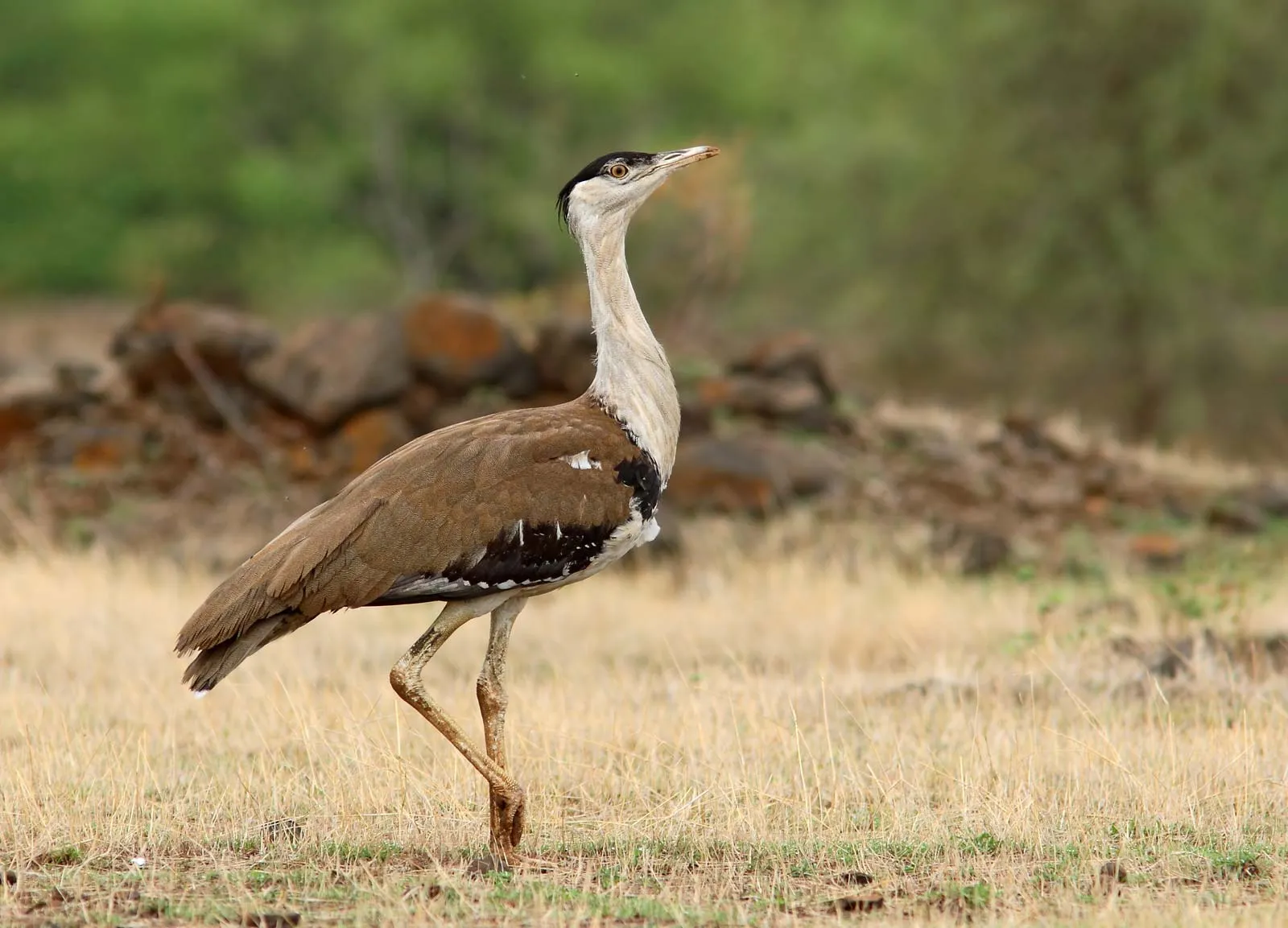
Great Indian Bustard (Ardeotis nigriceps)
- ~1 m tall; males larger; ground-nester
- Diet of insects, seeds, and small vertebrates
- Keystone for India's arid/semi-arid grasslands
Flagship Value
Its conservation also protects blackbuck, harriers, and other grassland specialists, making it a critical umbrella species for ecosystem preservation.
Beyond the GIB: India's Other Threatened Bustards
Shared habitats, threats, and solutions mean wins for one species often help the others. Our grassland conservation approach benefits all of India's bustard species.
Daily Operations
01
Field Patrols
Eco-guards conduct daily patrols, logging time, routes, habitat, flock size, and threats via mobile apps synced to central GIS.
- QA filters duplicates and validates timestamps
- Real-time GPS tracking and route optimization
- Behavioral observations and threat assessment
- Integration with M-STrIPES platform
📷 Figure 1. Field patrol data collection at dawn in Rollapadu
grasslands.
Evidence Tracking
02
Indirect Signs
Bustard footprints, dust-bathing sites, scrape nests, eggshells, predator scat/tracks—all inform risk mapping and nest buffers.
- Sensitive coordinates masked in public outputs
- Seasonal nest monitoring protocols
- Predator activity assessment
- Habitat use pattern analysis
📷 Figure 2. Bustard scrape nest documented during pre-monsoon season.
Digital Monitoring
03
Camera Traps
2 km² grid, paired cameras for re-detection. Images are geo-tagged, time-stamped, batch-processed for ID, and expert-verified.
- 20-megapixel, motion-activated deployment
- Individual identification using AI recognition
- Sympatric species documentation
- 40-45 day deployment cycles
📷 Figure 3. Camera-trap image of Great Indian Bustard.
Spatial Intelligence
04
GIS & Analysis
Comprehensive spatial analysis combining sightings heatmaps, power-line collision overlays, and environmental correlations.
- Sightings heatmaps with temporal analysis
- Power-line collision risk overlays
- Grazing-pressure proxies mapping
- Seasonal activity vs rainfall trends
📷 Figure 4. Heatmap of bustard sightings overlain with power-line corridors.
Key Performance Indicators (KPI)
Measurable outcomes tracking conservation effectiveness across habitat protection, threat mitigation, and species monitoring.
Updated monthly
ℹ️
Bird Diverters Installed
128
priority spans
operational & verified
Diverter count includes only operational units on mapped spans; refreshed monthly.
Updated quarterly
ℹ️
Native Grassland Restored
245
hectares
≥12 mo establishment
Measured with target cover assessment after 12+ months establishment.
Updated monthly
ℹ️
Community Patrol Effort
11,428
hours
GPS verified
Rostered hours vs GPS logs validation; updated monthly.
Updated monthly
ℹ️
Verified Bustard/Harrier Sightings
40+
individuals
photo-verified
Photo-verified/multi-observer; duplicates merged within 24h/1km.
Analytical Outputs
Data-driven insights enabling targeted conservation interventions and measurable impact assessment.
9,800 km
Target Coverage
Patrol Effectiveness (2021-22)
Demonstrating field coverage beyond planning benchmarks
117% Achieved
11,428 km
Actual Coverage
Verified Bustard Sightings
40+
Individuals recorded, predominantly near restored grass patches
Patrol Effectiveness
117%
Field coverage beyond planning benchmarks
High-Risk Zones
Mapped
Power-line corridors overlaid with sighting data
Why Monitoring Matters
This framework serves as the scientific backbone of Rollapadu's conservation efforts, enabling:
01
Detection of breeding zones and high-use corridors
02
Targeted threat mitigation (diverter installation, grazing regulation)
03
Adaptive management with real-time spatial data
04
Informed policymaking and measurable progress tracking
From Data to Action
Real-time monitoring outputs directly inform conservation interventions and adaptive management strategies.
Hotspot Spans → Immediate Diverter Placement
Undergrounding where feasible under 2024 refinements
Drought Pressure → Water-point Scheduling
Tanker support in low-disturbance sites
Policy Context
2024 refinements direct immediate diverters and feasibility-based undergrounding, focused on mapped priority habitats. Monitoring outputs guide sequence and timing of works to minimize disturbance.