Bustard Recovery Program

The Great Indian Bustard (GIB)

Field Operations for Wildlife Conservation & Community Engagement

Critically Endangered

IUCN Red List Status

<200 Birds

Current population in India

Since 2016

Bustard Recovery Program

The Bird We're Saving

Great Indian Bustard

Ardeotis nigriceps

Critically Endangered

With an extremely small, rapidly declining population, the GIB faces imminent extinction risk.

Historical Range Loss

Once widespread across the Indian subcontinent, now confined to small pockets in the Thar and Deccan grasslands.

Rapid Decline

Population has crashed from thousands to approximately 150 individuals across fragmented habitats.

Current Status

Population estimate     ~150 individuals
IUCN Red List        Critically Endangered
Primary habitats    Rajasthan, Gujarat, Maharashtra, Andhra Pradesh
Trend                             Rapidly declining

Hope for Recovery: With immediate action on power-line safety and habitat protection, the species can be pulled back from extinction.

Beyond the GIB: India's Other Threatened Bustards

Shared habitats, threats, and solutions mean wins for one species often help the others. Our grassland conservation approach benefits all of India's bustard species.

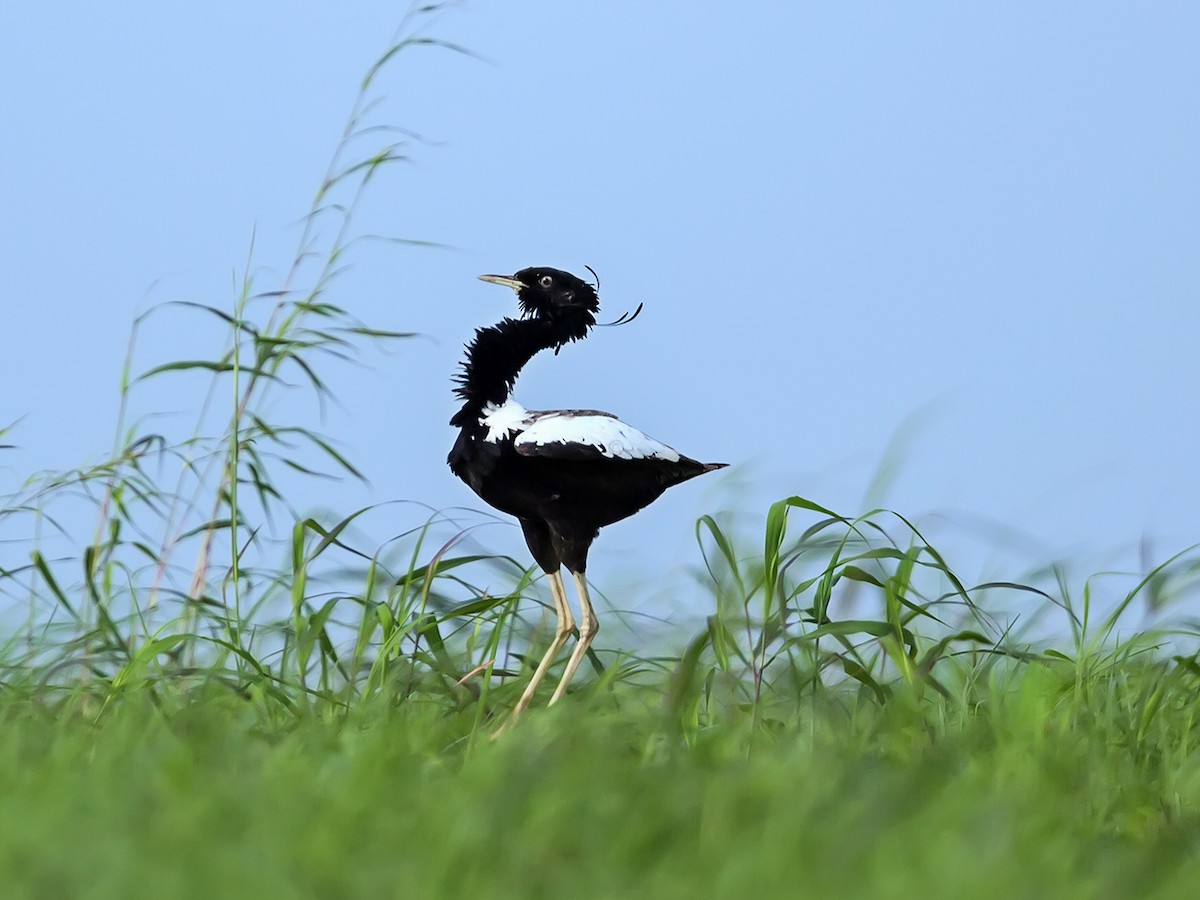
lesser florican
India's smallest bustard species, famous for spectacular monsoon courtship displays. Population is collapsing across northwest and central India due to habitat loss and agricultural intensification.
Distribution

Rajasthan, Gujarat, Madhya Pradesh, Maharashtra

Breeding Season

Monsoon months (July-September)

The most threatened of India's bustards, surviving in tiny fragments of floodplain grasslands in the Brahmaputra valley and parts of Southeast Asia. Extremely vulnerable to flood control and agricultural conversion.

Last Strongholds

Assam (India), Cambodia, Nepal

Population Estimate

Less than 1,500 worldwide

Shared Threats, Shared Solutions

Grassland Policy

Protecting native grasslands benefits all ground-nesting species

Safer Power Grid

Bird-safe infrastructure protects all large flying species

Community Engagement

Local stewardship creates safe havens for multiple species